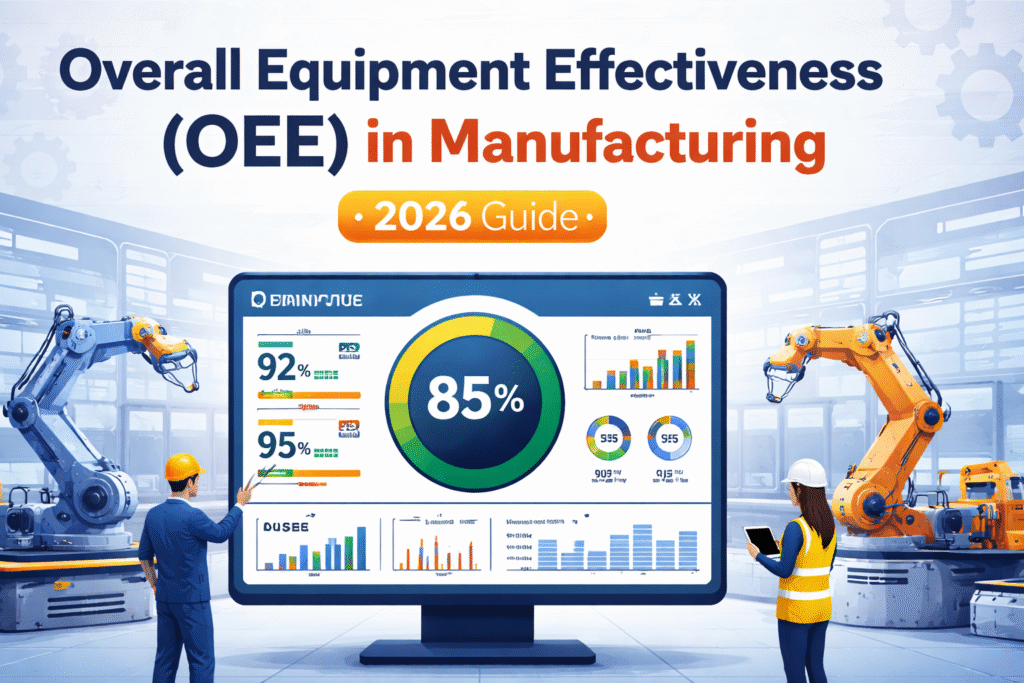
In 2026, overall equipment effectiveness (OEE) has become one of the most critical performance indicators for modern manufacturers. As factories adopt digital solutions, understanding OEE in manufacturing is essential for evaluating how effectively production equipment is being used and where improvements can drive profitability. Predictive Maintenance in Industry 4.0 :How Smart MES Systems Prevent Downtime
1. What Is Overall Equipment Effectiveness?
Overall equipment effectiveness is a standard benchmark that measures how well manufacturing equipment performs relative to its full potential. It tracks the combination of availability, performance, and quality output to provide a single, powerful KPI.
OEE helps manufacturers answer:
Are machines running when they should?
Are they producing at ideal speed?
Is the output defect-free?
2. The OEE Formula & How It Works
To calculate OEE KPI manufacturing, you multiply three key ratios: OEE = Availability × Performance × Quality
Availability measures uptime vs downtime
Performance measures actual speed vs ideal cycle times
Quality measures good units vs total units
This simple yet powerful formula enables factories to identify production losses and plan improvements.
3. Why OEE Matters for Production Efficiency
Tracking manufacturing equipment effectiveness is not just reporting — it’s a strategic advantage:
Helps prioritize improvement areas
Provides objective performance insight
Drives accountability across teams
Aligns frontline operators with management goals
With the incorrect data, decisions lag — but with accurate OEE tracking, factories can optimize processes in real time.
4. How to Improve OEE in Your Factory
Improving OEE in manufacturing requires discipline and visibility. Successful strategies include:
Reducing unplanned downtime
Training operators on equipment best practices
Introducing real-time monitoring systems
Using MES dashboards to highlight issues instantly
A Manufacturing Execution System (MES) directly captures machine and production data, greatly improving the accuracy of OEE KPI manufacturing. Rather than relying on manual data entry, MES provides:
Real-time performance dashboards
Automated downtime and speed tracking
Quality metrics tied to production runs
This automated approach eliminates data lag and provides actionable insights.
Understanding and tracking overall equipment effectiveness is no longer optional for modern manufacturers — it’s a strategic imperative. For factories focused on continuous improvement, investing in systems that support real-time OEE tracking drives performance, visibility, and profits in 2026 and beyond.